Material is a positioning decision
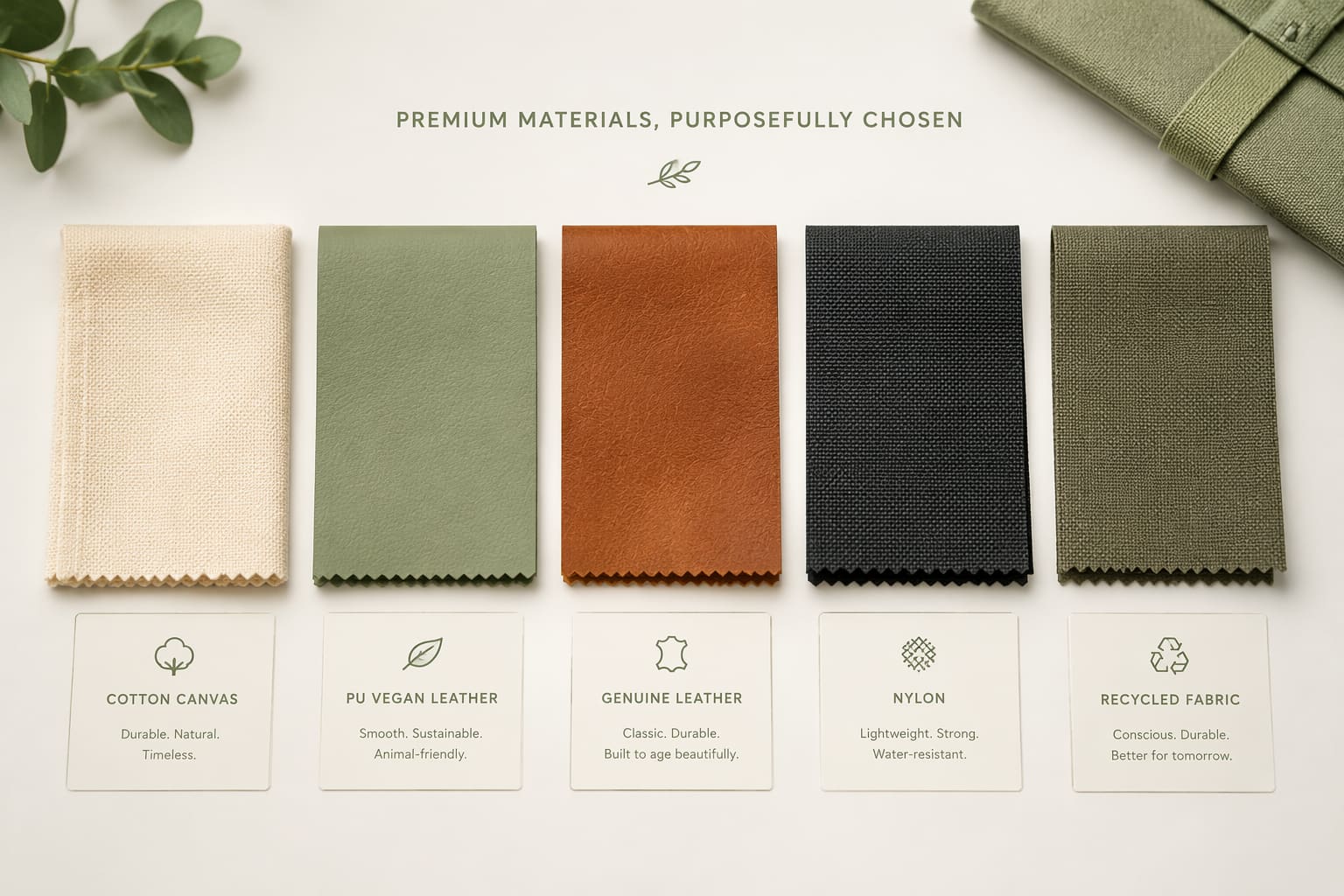
Material affects structure, appearance, care, performance, price, and the claims a brand may make. A recycled-content fabric tote and a full-grain leather bag can carry similar items but require different specifications and documents. The useful question is not which material is universally best, but which material and construction meet the product requirements.
Compare the five groups below by intended use, target price, performance tests, care method, and available documentation.
The five materials at a glance
Cotton canvas
Specify fibre composition, fabric weight, weave, shrinkage, and decoration. Organic or recycled claims require supporting documents.
PU synthetic leather
Specify the backing, coating system, thickness, surface, abrasion, flex, colorfastness, and hydrolysis requirements.
Animal leather
Specify species, grain or split layer, thickness, temper, surface treatment, natural variation, and restricted-substance requirements.
Nylon
Specify denier, weave, coating, tear strength, abrasion, colorfastness, and any water-repellency requirement.
Recycled-content fabrics
Specify fibre type, recycled percentage, source category, construction, performance, traceability, and claim documents.
Balance performance, cost, and brand signal
Durability cannot be inferred from a material family alone. Nylon performance varies by yarn, weave, coating, and construction; leather varies by layer, grade, finish, and care; PU synthetic leather varies by backing, coating, flex points, and hydrolysis resistance. Recycled content describes feedstock, not automatic performance.
Select the lowest-cost specification that still meets the required structure, appearance, tests, care expectations, and target-market rules. Validate the choice on a pre-production sample and with relevant material records.
Get certifications and test reports up front
If sustainability or compliance is part of your pitch, secure the paperwork before you commit to bulk. Ask for the current recycled-content or organic-fiber documentation available for the selected material and market, including GRS or GOTS where applicable. For markets like the US and EU, ask about Prop 65, REACH, and any restricted-substance testing relevant to your category. A capable manufacturer should help identify which documents and third-party reports need to be confirmed for your specific order.
FAQ
Which bag material is the most durable?
There is no single most durable material. Compare the selected material article, bag construction, loaded use, care method, and relevant abrasion, tear, seam, attachment, flex, or hydrolysis tests.
Is PU synthetic leather a suitable alternative to animal leather?
It can be for many fashion applications. Compare the required appearance, backing, coating, abrasion, flex, hydrolysis behavior, care, expected use, and price point rather than treating the two materials as equivalent.
Are recycled fabrics durable enough for retail bags?
They can be, but recycled content alone does not determine durability. Review the yarn, weave, fabric weight, coating, construction, target tests, and current recycled-content documents for the selected order.
Can you mix materials in one bag?
Yes. A canvas body with PU synthetic leather trim, or a recycled-content shell with a nylon base, can assign different materials to different functions. Confirm attachment, color interaction, care method, and required documents on the pre-production sample.
Material Options
Materials for Custom Production
Compare materials by use, construction, price point, and the documentation required for your target market.
Canvas
A woven fabric available in different fibre compositions and weights for tote bags, shopping bags, and casual shoulder bags.
Learn moreAnimal Leather
Animal leather specified by species, layer, grade, thickness, temper, grain, and finish for handbags and wallets.
Learn moreNylon
Nylon options specified by denier, weave, coating, lining, reinforcement, and target performance for sport, casual, and travel bags.
Learn morePU Synthetic Leather
A configurable synthetic material whose backing, coating, thickness, texture, and performance requirements should be matched to the product life and target cost.
Learn moreRecycled Fabrics
Recycled-content options including recycled polyester, recycled nylon, and recycled cotton, subject to material and order documentation.
Learn moreNot sure which material fits your product?
Tell us the intended use, target price, performance requirements, and market. We will identify comparable material specifications and sample checks.
Get a Custom QuoteSources and standards
- ISO 15115:2019 — Leather vocabulary · International Organization for Standardization
- Leather Guides — 16 CFR Part 24 · U.S. Federal Trade Commission
- Standards FAQs — GRS and recycled-content claims · Textile Exchange
- REACH Regulation · European Commission