Material is a positioning decision
Material does more than determine durability — it signals price, values, and category before a customer reads a single word. A recycled canvas tote and a full-grain leather satchel can carry the same items, but they speak to completely different buyers. Choosing material is therefore a positioning decision as much as an engineering one. The right question is not "which fabric is best?" but "which fabric best supports the product I'm trying to sell?"
The five materials below cover the vast majority of custom bag briefs. Read each with your end use, target price, and brand story in mind.
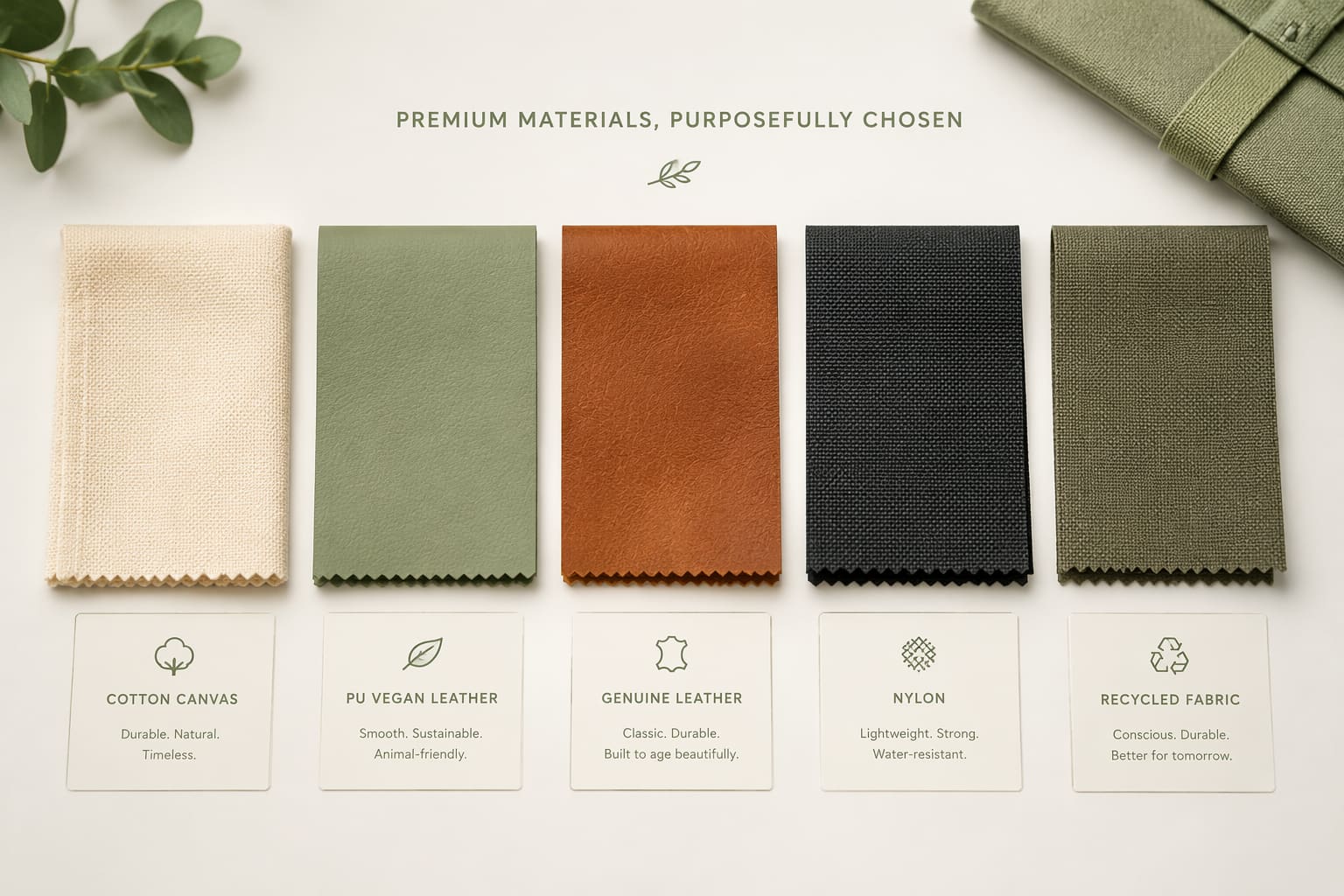
The five materials at a glance
Cotton canvas
Casual, printable, and eco-friendly in organic or recycled form. Best for retail totes, shoppers, and lifestyle bags. Mid-range cost, excellent brand-print surface.
PU (vegan) leather
The look of leather without animal materials, at a lower and more predictable cost. Best for fashion bags, crossbodies, and accessories where a polished finish matters.
Genuine leather
Premium hand-feel, ages beautifully, commands the highest price. Best for luxury and heritage positioning where longevity is part of the value story.
Nylon
Lightweight, water-resistant, and highly durable. Best for travel, sport, and technical bags. Recycled nylon adds a sustainability angle.
Recycled fabrics (rPET)
Made from post-consumer bottles. Current recycled-content documentation can be checked for the selected material and market. Best when a credible eco story is central to the brand.
Balance performance, cost, and brand signal
Every material trades off along three axes: how long it lasts, what it costs, and what it says about your brand. Nylon and genuine leather sit at the durable end but for very different prices and audiences. PU leather offers a premium look at a controlled cost, at the expense of the multi-decade lifespan of real leather. Canvas and recycled fabrics win on story and printability, and modern recycled options have closed much of the old durability gap.
A useful rule: pick the cheapest material that fully supports your positioning — not the cheapest material overall. Under-specifying to save a few cents per unit is the fastest way to generate returns and erode brand trust; over-specifying pushes your price above what the market will pay.
Get certifications and test reports up front
If sustainability or compliance is part of your pitch, secure the paperwork before you commit to bulk. Ask for the current recycled-content or organic-fiber documentation available for the selected material and market, including GRS or GOTS where applicable. For markets like the US and EU, ask about Prop 65, REACH, and any restricted-substance testing relevant to your category. A capable manufacturer should help identify which documents and third-party reports need to be confirmed for your specific order.
FAQ
Which bag material is the most durable?
For everyday abuse, nylon and genuine leather lead — nylon for water resistance and abrasion, leather for structural longevity if maintained. Heavy cotton canvas (16 oz+) is also very durable for its price and is easier to print.
Is PU leather a good alternative to real leather?
For many fashion applications, yes. PU (vegan) leather delivers a polished, leather-like finish at a lower and more predictable cost and avoids animal materials. The trade-off is a shorter lifespan than genuine leather, so match it to the product's expected life and price point.
Are recycled fabrics durable enough for retail bags?
Modern recycled PET (rPET) has closed much of the old durability gap and is used widely in retail totes, backpacks, and accessories. It can support a credible sustainability story when the selected order has current recycled-content documentation.
Can you mix materials in one bag?
Yes — mixing is common and often smart. A canvas body with PU-leather trim, or a recycled shell with a durable nylon base, lets you balance cost, durability, and aesthetics. Just confirm the construction and any required material documents in a pre-production sample.
Eco-Friendly Options
Sustainable Materials
Choose material options with order-level documentation matched to your target market
Canvas
Casual, fashionable, and eco-friendly canvas fabric — perfect for shoulder bags, tote bags, and shopping bags with a relaxed lifestyle appeal.
Learn moreGenuine Leather
Premium quality genuine leather and cowhide for high-end handbags and wallets — naturally textured and suited to products designed for long-term use.
Learn moreNylon
Lightweight nylon with water-resistant finish options and tear-resistant constructions for sport bags, casual bags, and travel accessories.
Learn morePU Leather
Affordable, lightweight, and available in a wide range of colors and textures — ideal for handbags, crossbody bags, and shoulder bags that combine style with practicality.
Learn moreRecycled Fabrics
Sustainable recycled materials including rPET, recycled nylon, and recycled cotton — for brands committed to environmental responsibility across all product categories.
Learn moreNot sure which material fits your product?
Tell us your product, price point, and audience — we'll recommend materials and send samples so you can feel the difference.
Talk to our team